Cade Cunningham's Lung Literally Collapsed. He Came Back and Dropped a Double-Double Anyway.
TL;DR
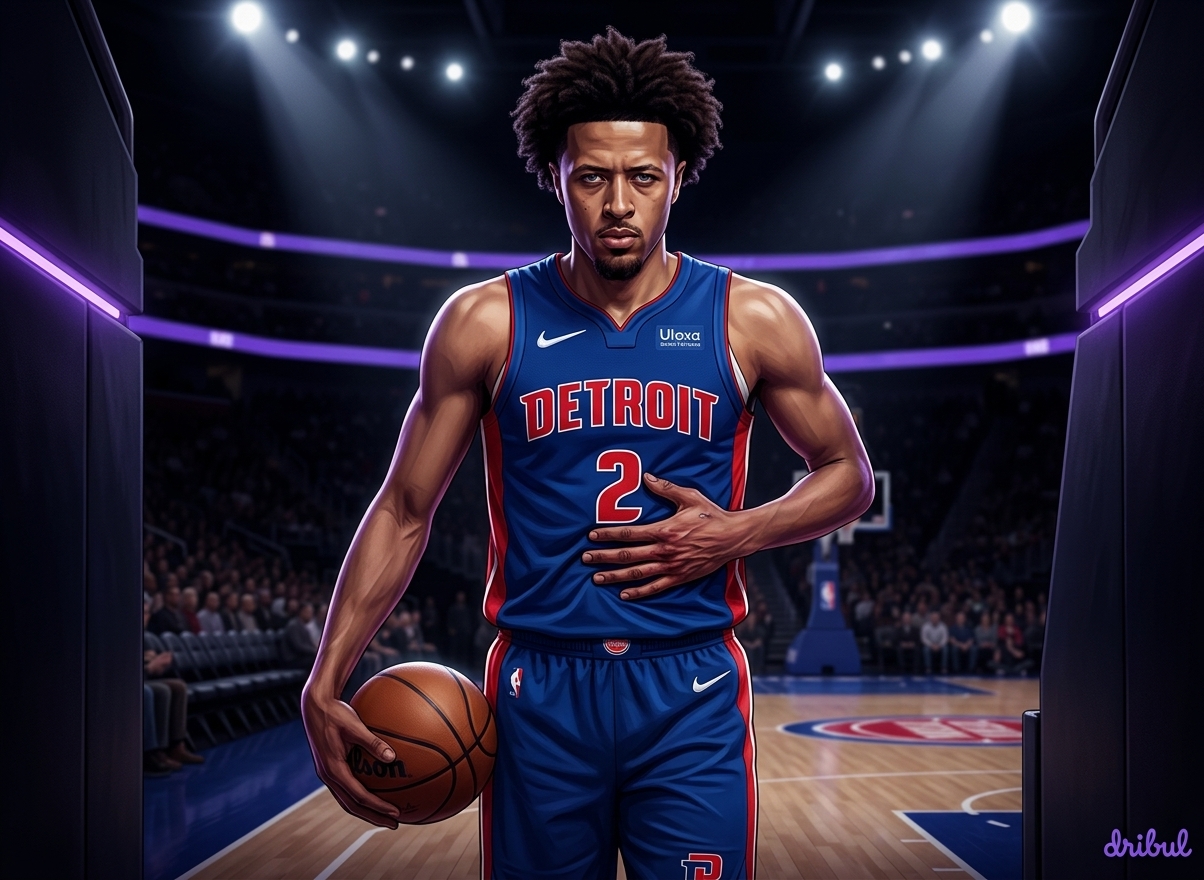
Three weeks after a terrifying collision left him with a collapsed lung, Cade Cunningham walked back onto the court and posted 13 points and 10 assists like it was nothing. The Pistons went from 14 wins to the 1 seed — and their best player just proved he's built different.
I'm going to tell you something that doesn't make sense.
On March 17, Cade Cunningham dove for a loose ball, collided with Washington's Tre Johnson, and his left lung collapsed. Pneumothorax. The kind of injury that makes doctors use words like "panicking" and "beat up" and "couldn't get my heart rate up for weeks."
Three weeks later, he walked onto the court in Detroit, played 26 minutes against the Milwaukee Bucks, and posted 13 points, 10 assists, and 5 rebounds. A double-double. In his first game back from a collapsed lung.
The Pistons won 137-111.
I'm not going to pretend that's normal.
The scariest three weeks in Detroit
Cade talked about it after the game, and honestly, it was hard to listen to. "It was different than any injury I've ever had," he said. "I was kind of beat up and panicking a lot just with what I was feeling."
Think about that for a second. This is a guy who tore his shin bone as a rookie, missed an entire season, came back and turned a 14-win franchise into a playoff team. He doesn't panic. But a collapsed lung? That'll do it.
The recovery was brutal in a way most basketball injuries aren't. No running. No conditioning. Nothing that raises your heart rate. For a 24-year-old who's used to playing 35 minutes a night, that's a special kind of torture. "Couldn't get my heart rate up, which was boring," he said. Then he added, with a grin: "My heart rate went up a few times watching the team, which was, you know…"
Yeah. We know.
14 wins. Then 58.
I need to zoom out for a second because I don't think people fully appreciate what's happening in Detroit.
Two seasons ago — just two — the Pistons won 14 games. Fourteen. They lost 28 in a row, the longest single-season losing streak in NBA history. They were historically, embarrassingly, record-breakingly terrible.
Last season, they went from 14 wins to the playoffs. A 30-win turnaround. Their first playoff game since 2008.
This season? 58-22. The 1 seed in the Eastern Conference. First Central Division title in 18 years. On pace for their first 60-win season since 2006, back when Chauncey Billups and Rip Hamilton were running the show.
14 wins to the 1 seed in two years. No team in NBA history has ever done that.
And the engine behind all of it is averaging 24.5 points, 9.9 assists, and 5.6 rebounds per game. That's a first-team All-NBA season by any measure. Except Cade won't be eligible for any awards this year because he missed 11 games with a collapsed lung. The NBA's games-played threshold doesn't care why you missed them.
If that doesn't make you a little angry, I don't know what to tell you.
The kid who kept the lights on
While Cade was on the couch trying not to let his heart rate spike during Pistons games, second-year guard Daniss Jenkins decided to become a starter-caliber point guard overnight.
In three April games without Cunningham, Jenkins averaged 20 points and 9.7 assists. He dropped 30 on the Lakers — 11-of-18 from the field, 4-of-5 from three. The Pistons went 8-3 without Cade, and Jenkins was the biggest reason why.
That's the thing about these Pistons. Two years ago, they had nothing. Now they have so much depth that their star's lung can collapse and they barely flinch. Jenkins, Jaden Ivey, Ausar Thompson — there's a wave of young talent in Detroit that most people still aren't paying attention to.
But Jenkins playing well doesn't change the math. Cade Cunningham is the reason the Pistons are the 1 seed. He's the reason they went from a punchline to a contender in 24 months. And when it mattered most — in a contract year, with the playoffs two weeks away, after three weeks of not being able to breathe right — he came back and ran the offense like he'd never left.
6-of-11 shooting. 10 assists to 0 turnovers in 26 minutes. On a minutes restriction. After a collapsed lung.
The history of playing through this
For context: CJ McCollum suffered a collapsed lung twice in his career. He missed 12-17 games each time. Gerald Wallace had his lung collapse in 2009, needed a tube inserted into his chest, and missed 7 games.
Cade missed 11 games and came back with a double-double. In a blowout. Looking completely unbothered.
I watched every minute of that Bucks game. Cade wasn't forcing anything. He wasn't trying to prove a point. He was just... running the offense. Finding cutters, hitting mid-range pull-ups, controlling the pace. The Pistons built a 75-57 halftime lead and Detroit could exhale — both literally and figuratively — for the first time in three weeks.
What comes next
The Pistons have two games left in the regular season. Cade will be on a minutes restriction heading into the playoffs. But he's back. And a Detroit team that went 8-3 without him is about to get its best player back at full strength for the postseason.
Two years ago, this franchise was dead. A 28-game losing streak, a 14-win season, a fanbase that had given up. Now they're the 1 seed with a 24-year-old superstar who just came back from a collapsed lung and dropped a double-double like it was a Tuesday shootaround.
Cade Cunningham isn't eligible for All-NBA this year. The awards voters won't get to put his name on a ballot. But everyone in Detroit already knows what he is.
He's the guy who brought a dead franchise back to life — and not even a collapsed lung could slow him down.
Keep Reading
The WNBA Just Raised Foul Fines 2.5x. Everyone Calls It the Caitlin Clark Tax.
6 min read
WNBA GMs Just Took Caitlin Clark's Franchise Crown. The Tiebreaker Was a Groin Injury.
5 min read

Lauren Betts Is 6'7", Won a National Title, and Just Outplayed Angel Reese in Preseason. Washington Has a Problem on Their Hands — a Good One.
6 min read